
Before replacing a ceiling fan: a practical planning guide
Room size, ceiling height, controls, and the existing fixture all affect what makes sense before a ceiling fan replacement.
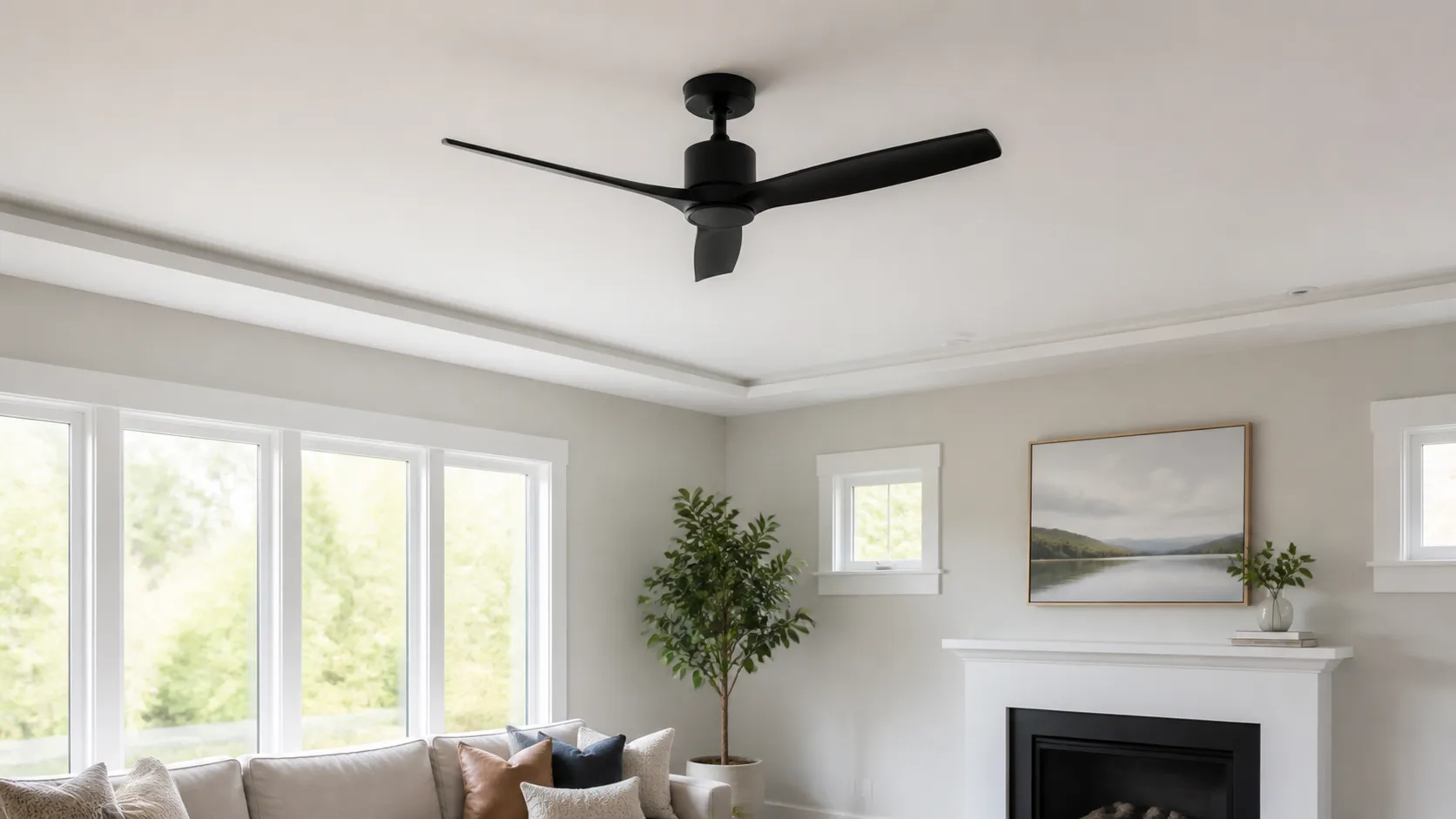
A ceiling fan can make a room more comfortable, improve air movement, and update the look of a space at the same time. The right replacement is not only about finding a style you like. Ceiling height, room size, controls, the existing mounting location, and the condition of the current fixture all affect whether a fan will fit and work well.
Planning a few details before buying a new fan makes the installation smoother and helps avoid a common disappointment: a fan that looks good in the box but feels too large, too small, too low, or poorly matched to the room once it is installed.
Begin with the room, not the fan style
Start by standing in the center of the room and looking at how it is used. A bedroom, living room, office, covered porch, and dining area each have different needs. Consider where people sit or sleep, where doors open, how the room is heated and cooled, and whether the fan will be the main source of light or only one part of the lighting plan.
Room size is a useful starting point. A compact fan may be enough for a small bedroom or office, while a larger living room often needs a wider blade span or more than one fan. Manufacturer guidance is the best place to confirm the recommended fan size for a specific model and room area. Do not choose only by appearance; an undersized fan may not move enough air, while an oversized fan can overwhelm a smaller space.
Make a simple note of the room dimensions, the ceiling height, and the existing fixture location. A quick photo from each corner is helpful too. Those details are more useful than trying to remember the room later.
Check the ceiling height and clearance
The fan needs enough space to operate comfortably and safely. Measure from the finished floor to the ceiling, then note whether the ceiling is flat, vaulted, angled, or unusually high. A standard fan downrod may work in one room but hang too low in another.
Ceiling-fan manufacturers publish clearance requirements for their products. Review those instructions before choosing a fan, especially for rooms with sloped ceilings, bunk beds, lofts, tall furniture, or frequent foot traffic beneath the fixture. If the room has a low ceiling, a low-profile or “hugger” style may be a better fit. If the ceiling is higher, an appropriate downrod can help position the blades where they will circulate air more effectively.
Keep furniture in mind as well. A fan above a bed, dining table, or seating area often works well when centered and correctly sized. A fan installed too close to a tall cabinet, doorway, or wall can feel crowded and may not move air as intended.
Look closely at the fixture that is already there
Before shopping, look at the existing ceiling fixture without taking anything apart. Is it a fan already, a basic light fixture, or a location with no fixture at all? Is the ceiling flat and stable around the fixture? Does the existing fan wobble, make unusual noise, or have a pull chain, wall switch, remote, or light kit?
This information helps define the work. Replacing an existing ceiling fan can be a straightforward installation when the mounting support, switch, and wiring are appropriate. Replacing a light fixture with a ceiling fan, or addressing a fixture that has been unreliable, may require a closer evaluation.
Do not assume every light-fixture location is ready to support a fan. A ceiling fan creates movement and weight that a standard light fixture may not be designed to handle. If there is uncertainty about the electrical box, wiring, breaker, switch behavior, or the condition of the ceiling, use a qualified electrician or the appropriate professional to assess it before installation.
Choose controls that fit how you use the room
Today’s fans can use pull chains, wall controls, handheld remotes, or app-based controls. The best option is usually the one that will be easiest for the household to use every day.
Think through a few questions before purchasing:
- Do you want the fan and light controlled separately?
- Is a wall switch already in the right place?
- Would a remote be easy to keep track of, or would it become a frustration?
- Do you need a dimmable light, a night-light setting, or a separate reading lamp elsewhere in the room?
- Will the fan be used by someone who prefers simple, familiar controls?
Remote-controlled fans can be convenient, but they may require attention to receiver placement and manufacturer instructions. A wall control can feel more natural in a frequently used room. If you are replacing an older fan, take a photo of the current switches and controls before choosing the new model.
Pay attention to light, blade finish, and noise expectations
The fan is often one of the most visible objects in a room. Blade color, housing finish, and light shape can tie into the room without needing to match every detail exactly. A simple fan with a neutral finish usually works in more situations than a highly decorative one that may feel dated quickly.
Lighting deserves equal attention. If the ceiling fan will replace the room’s main light, look at the fixture’s light output and whether its bulbs or integrated LEDs suit the space. A room that depends on the fan for all of its lighting may need more brightness than a bedroom with bedside lamps or a living room with several other fixtures.
Noise matters too, especially in bedrooms, nurseries, and home offices. Read the manufacturer’s specifications and reviews for the exact model rather than assuming every fan is equally quiet. A properly installed fan should run smoothly. Persistent wobble, clicking, grinding, or a new electrical smell is a sign to stop using the fixture and have it evaluated.
Take the photos and measurements that help most
If you are requesting an estimate or discussing an installation, a few clear photos can answer many questions without a long back-and-forth. Include:
- A wide photo of the whole room.
- A photo looking directly up at the existing ceiling fixture.
- A photo of the wall switch or controls that operate it.
- A photo of any sloped ceiling, beam, or nearby obstacle.
- The room dimensions and ceiling height, if available.
If you already bought the fan, photograph the box label and keep the instructions and mounting hardware together. Model information helps confirm the intended mounting method, downrod options, blade span, and any special requirements.
Avoid removing the existing fixture or opening electrical boxes just to take a photo. A clear image from below, along with basic room information, is usually enough for the first conversation.
Prepare the room for installation day
Move fragile objects, lamps, and small furniture away from the work area. Cover or relocate a bed, dining table, or upholstered furniture if it sits directly below the fixture. A clear path to the room and a safe place for tools make the visit easier.
Let the installer know about pets, building access, parking restrictions, or times when the room needs to stay quiet. If you are keeping the old fan, decide that in advance. If it is being discarded, make sure that is clear as well.
You do not need to make the room perfect. The goal is simple access, reasonable protection for nearby furniture, and a straightforward way to reach the fixture safely.
Know when to pause and get the right help
Some conditions are not regular replacement work. Stop and contact a qualified electrician or appropriate professional if you notice a hot switch plate, a burning smell, sparking, repeated breaker trips, damaged wiring, water staining around the fixture, or an electrical issue that is not clearly understood. Do not attempt to work on a live circuit or rely on a fan installation to solve an electrical problem.
The same applies when a ceiling shows movement, water damage, or a mounting location that does not seem solid. The support and electrical conditions should be correct before any new fan is installed.
A better result starts with a short plan
The best ceiling-fan replacement is one that fits the room, uses controls the household will actually enjoy, and is installed only after the mounting and electrical conditions are appropriate. A little planning prevents returns, unnecessary holes, and the frustration of choosing a fan that does not suit the space.
When you are ready, send JACK the Handyman a few room photos and details through the quick planning estimate form or book a repair. JACK can help homeowners in Great Bend and surrounding areas with straightforward ceiling-fan replacement and installation work, and can help identify when a specialized trade is the better next step.